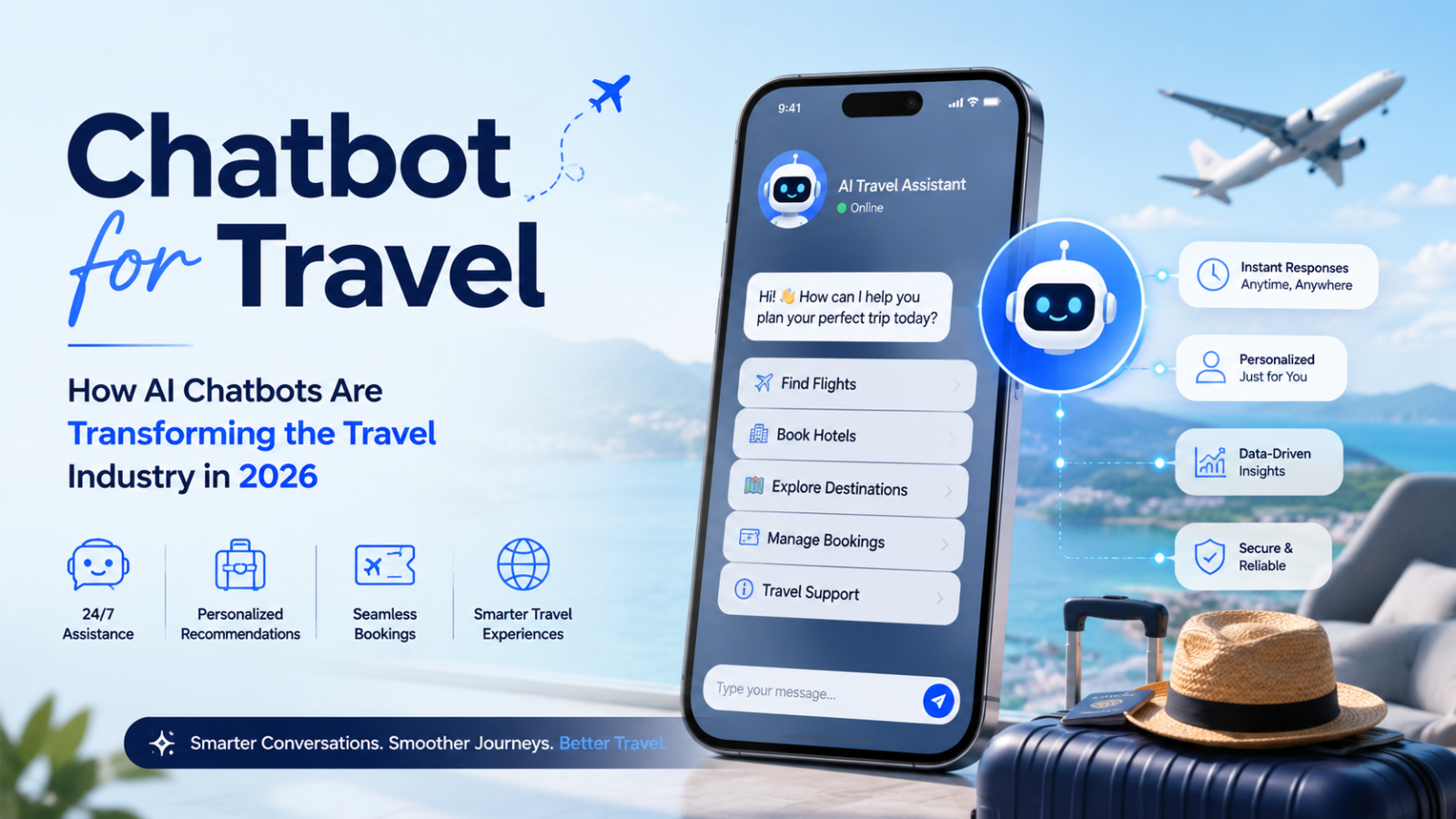
Chatbot for Travel — How AI Chatbots Are Transforming the Travel Industry in 2026
Discover how travel businesses use AI chatbots to answer traveler queries, automate bookings, capture leads 24/7, and increase revenue — without extra staff. Free to start with Glanceia.
Introduction
Travel is one of the most research-heavy industries on the internet. Before a traveler books a single flight or hotel, they spend hours — sometimes days — reading reviews, comparing packages, checking visa requirements, asking questions, and second-guessing decisions.
Most of those questions land on travel business websites. And most of those travel business websites are not equipped to answer them instantly.
A potential customer lands on a tour operator's website at 10 PM with three specific questions about a Bali package. There is no one there to answer. They send an inquiry email, do not hear back until the next afternoon, and by then have already booked through a competitor who responded faster.
This is the core problem an AI chatbot solves for travel businesses — and it is one of the most impactful use cases for chatbot technology available today. This guide covers exactly how chatbots are being used across the travel industry in 2026, what they can do, and how to set one up for your travel business using Glanceia.
Why the Travel Industry Needs Chatbots More Than Almost Any Other
Travel is unique in how information-intensive the purchase decision is. A traveler buying a ₹80,000 Maldives package or booking a Europe trip for their family is not making an impulse decision. They have questions — specific, detailed, sometimes anxious questions — and they need answers before they feel confident enough to pay.
The types of travel businesses that benefit most from chatbots include:
Tour operators and travel agencies handling package inquiries and bookings
Hotel and resort websites answering pre-arrival and pre-booking queries
Adventure and activity booking platforms explaining what is included and safety requirements
Visa and documentation service providers handling process and eligibility questions
Destination management companies managing group and corporate travel inquiries
Freelance and independent travel agents who cannot be available 24/7 on their own
What all of these have in common: high inquiry volume, highly repetitive questions, and a customer who will go elsewhere if the answer does not come fast enough.
What Travelers Are Actually Asking — and What Your Chatbot Should Answer
Understanding the specific questions travelers ask is the foundation of building a chatbot that actually converts. Here are the most common question categories across travel businesses:
Package and itinerary questions What is included in the package? Is the flight included or just the land package? How many nights are in each destination? Can the itinerary be customised? Is it a group tour or private?
Pricing and payment questions What is the total cost? What is included in the base price? Are there additional charges for meals, transport, or activities? Can I pay in installments? Do you charge in INR or USD?
Availability and booking questions Is the package available on my dates? How do I book? What is the confirmation process? How far in advance do I need to book?
Visa and documentation questions Do I need a visa for this destination? What documents are required? How long does the visa process take? Do you help with visa applications?
Safety and trust questions Is this trip suitable for solo female travelers? What happens if I need to cancel? What is the refund policy? Are flights refundable? Do you have IATA accreditation or registration?
Practical travel questions What is the best time to visit? What should I pack? What is the local currency? Is the destination family-friendly? Are there age restrictions?
Every single one of these question categories can be answered by a well-trained AI chatbot — instantly, at any hour, without a human agent involved.
How Different Types of Travel Businesses Use Chatbots
Tour Operators and Package Travel Agencies
For tour operators, the chatbot acts as a 24/7 travel consultant on the website. It asks the traveler about their destination interest, travel dates, group size, and budget — then recommends matching packages from the operator's catalog, answers detailed itinerary questions, and captures the traveler's contact details for follow-up by a human agent.
The result: every visitor who lands on the website — including the large percentage who browse at night and on weekends — gets an instant, helpful response instead of a contact form that might get replied to two days later.
Hotels and Resorts
Hotel websites face a specific challenge: travelers ask extremely detailed pre-booking questions — pool timings, breakfast inclusions, sea-facing availability, pet policies, early check-in options — before they commit to booking. A chatbot trained on the property's full information pack can answer all of these instantly.
Beyond pre-booking questions, hotels also use chatbots to handle pre-arrival requests — airport transfer arrangements, dietary requirements, special occasion setup requests — reducing the load on the front desk team significantly.
Visa and Documentation Services
Visa service providers deal with some of the most anxiety-driven inquiries in the entire travel industry. Travelers are worried about timelines, eligibility, document requirements, and whether their application will succeed. A chatbot trained on up-to-date visa information by destination can answer eligibility and process questions instantly, building confidence before the traveler pays for the service.
Adventure and Activity Booking Platforms
For activity booking platforms — think scuba diving, trekking, skydiving, or cooking class bookings — travelers have safety-related questions that feel too important to leave unanswered. A chatbot that proactively addresses safety protocols, fitness requirements, what to bring, and cancellation policies removes the final objections before a booking is completed.
Independent Travel Agents
Solo travel agents and small agencies face the toughest version of the availability problem — there is only one of them, and they cannot be online 24 hours a day. A chatbot trained on their standard packages, pricing, and processes gives every website visitor an instant response regardless of what time it is, and captures the lead so the agent can follow up during business hours.
Step-by-Step: Setting Up a Travel Chatbot With Glanceia
Step 1: Create a Free Account
Go to Glanceia and sign up. No credit card required. The free plan is fully functional and enough to get started and test with real visitor traffic.
Step 2: Build Your Travel Knowledge Base
This is the most important step — the content you upload determines how useful your chatbot actually is. For a travel business, upload:
Package and tour documents Your brochures, itinerary PDFs, and package specification sheets. The chatbot will read through these and use them to answer detailed questions about each package — day by day itinerary, inclusions, exclusions, hotel categories, transport arrangements.
Pricing sheets Upload your current pricing for all packages and tours, including seasonal pricing if applicable. Being able to answer pricing questions instantly is one of the highest-impact things a travel chatbot can do.
FAQ document Compile the 30 to 50 most common questions your team receives — via phone, WhatsApp, email, and walk-ins — and write specific, detailed answers to each one. This single document will handle the majority of what visitors ask.
Visa and destination information If you handle multiple destinations, create a document covering visa requirements, best time to visit, and practical travel information for each one.
Policies Cancellation policy, refund terms, booking process, payment terms — all clearly written and uploaded so the chatbot can answer these confidently.
For a detailed guide on uploading and structuring this content, see our post on how to train a chatbot on your own data.
Step 3: Set a Travel-Appropriate Welcome Message
Your opening message should feel warm, helpful, and immediately relevant to what a travel visitor is looking for. Strong examples:
"Hi! Planning a trip or have questions about our packages? Tell me where you want to go and I'll help."
"Hello! Ask me anything about our tours, pricing, or destinations — I'm here right now."
"Welcome! Looking for a holiday package or want to know about visa requirements? Just ask."
Step 4: Set Up Lead Capture for Travel Inquiries
Configure the chatbot to collect name, phone number, travel dates, preferred destination, and number of travelers from every visitor conversation. This gives your team everything they need to follow up with a meaningful, personalised callback — instead of starting from scratch with a generic "how can we help you" opening.
Step 5: Embed on Your Travel Website
Glanceia gives you a single embed script. Paste it into your website footer and the chatbot goes live on every page — your homepage, destination pages, package pages, and contact page — so visitors can ask a question no matter where they land.
For platform-specific steps, see our guides for WordPress, Wix, and Shopify.
Step 6: Test and Go Live
Test from an incognito browser window with real traveler questions before you consider it live. Check how it handles pricing questions, itinerary specifics, visa queries, and the inevitable "I'm not sure where I want to go — can you help?" type questions that travel businesses get constantly.
Real Example: Before and After for a Tour Operator
Before a chatbot: A mid-sized tour operator receives around 120 website inquiries per month. About 40 come through the contact form during business hours and get a reply within a few hours. The other 80 arrive evenings, weekends, and late nights — and get a reply the next working day or the following Monday. By that point, around 35% of those after-hours leads have already booked with another operator or stopped looking. That is roughly 28 lost potential bookings a month from people who were already interested enough to reach out.
After adding a chatbot: The same after-hours visitors now get instant answers to their questions — package details, pricing, availability — at the moment they are most engaged. The chatbot captures their contact details and travel requirements in the same conversation. The team arrives in the morning to a dashboard of pre-qualified, detailed leads instead of cold inquiry emails. The conversion rate from after-hours inquiries improves significantly simply because the response came while the traveler's interest was still live.
The ROI of a Travel Chatbot
The return on a travel chatbot is more direct than in most other industries because the booking values are high. A single recovered after-hours lead that converts into a ₹75,000 family holiday package is worth many months of any chatbot subscription fee.
Consider the math for a small tour operator:
100 website visitors a month
15% inquiry rate with a chatbot (vs 7% with contact form only)
That is 15 inquiries vs 7 — 8 additional inquiries per month
Even at a 20% conversion rate on those extra inquiries, that is 1 to 2 additional bookings per month
At an average package value of ₹50,000 — that is ₹50,000 to ₹1,00,000 in additional monthly revenue from the same traffic
The chatbot does not bring more visitors. It converts more of the visitors who are already there — and in travel, where booking values are high, that conversion lift has an outsized revenue impact.
Building a Travel Chatbot That Travelers Actually Trust
Trust is especially important in travel. People are handing over significant amounts of money and planning something they care deeply about. A chatbot that gives vague, inaccurate, or generic answers actively damages trust rather than building it.
Three things that determine whether a travel chatbot builds or erodes trust:
Specificity of answers A chatbot that answers "the Bali package costs between ₹45,000 and ₹65,000 depending on hotel category and travel dates, with the exact pricing shared once we confirm availability" is trustworthy. A chatbot that says "pricing varies — please contact us" is not useful and sends the visitor straight to a competitor.
Accuracy on visa and documentation Visa information changes frequently. Keep your uploaded visa documentation updated, and include a note in the chatbot's answers that visa requirements should be confirmed with official embassy sources — this is transparent, responsible, and actually builds more trust than pretending the chatbot is the last word on immigration rules.
Clear escalation path A travel chatbot should never leave a visitor in a dead end. For complex itinerary customisation, group bookings, or anything that genuinely requires a human conversation, the chatbot should immediately offer to connect them with your team — via WhatsApp, phone, or a callback request.
Common Mistakes Travel Businesses Make With Chatbots
Uploading outdated package pricing If your chatbot is quoting last season's prices, you will lose trust the moment a customer notices the discrepancy. Update pricing documents whenever rates change.
Not covering enough destinations A travel agency that handles 15 destinations but only uploads content for 3 will have a chatbot that confidently answers questions about 3 and looks incompetent for the other 12. Cover your full inventory.
Generic welcome message "Hi, how can I help you?" is not a travel welcome message. "Hi! Planning a trip or have questions about our tours? Tell me where you want to go and I'll help find the right package." — that is a travel welcome message.
Ignoring mobile visitors A large proportion of travel research happens on mobile — commutes, lunch breaks, late evenings on the sofa. Test your chatbot thoroughly on mobile before going live.
No follow-up process for chatbot leads The chatbot captures the lead. Your team needs to follow up quickly — ideally within 2 to 4 hours during business hours. A chatbot lead that sits uncontacted for 24 hours loses most of its value.
FAQ
Can a travel chatbot handle bookings end-to-end or just answer questions? Most travel chatbots built on platforms like Glanceia handle inquiry answering, package recommendations, and lead capture — with the final booking confirmed by a human agent. Full booking automation is possible but requires integration with your booking management system.
How do I keep the chatbot accurate when packages and pricing change seasonally? Update your uploaded documents in the Glanceia dashboard whenever packages or pricing change. Updates go live immediately without any changes needed on your website.
Does this work for small travel agencies, not just large operators? Small agencies benefit the most — a solo agent or small team cannot be available 24/7, but their chatbot can be. The after-hours lead capture alone often justifies the setup for small travel businesses.
Can the chatbot handle inquiries in multiple languages? Yes — if you serve international travelers, a chatbot trained on multilingual content can respond in the visitor's language without needing multilingual staff.
What if a traveler asks a very detailed or unusual question the chatbot cannot answer? The chatbot should acknowledge it cannot fully answer that specific question and immediately provide a direct route to a human — your WhatsApp number, email, or a callback request link. Never leave a traveler with no next step.
Final Thoughts
The travel industry runs on trust, speed, and information. Travelers who get the right answers fast book. Those who have to wait — or who cannot find the answers they need — book somewhere else.
An AI chatbot gives your travel business the ability to be present, responsive, and helpful at every hour of the day — answering the questions that would otherwise go unanswered, capturing the leads that would otherwise go cold, and starting the relationship that eventually becomes a booking.
Ready to add a chatbot to your travel website? Try Glanceia free →
Published by Laxman- Team Glanceia