AI Chatbot for Real Estate: How It Helps Agents Capture and Qualify More Leads in 2026
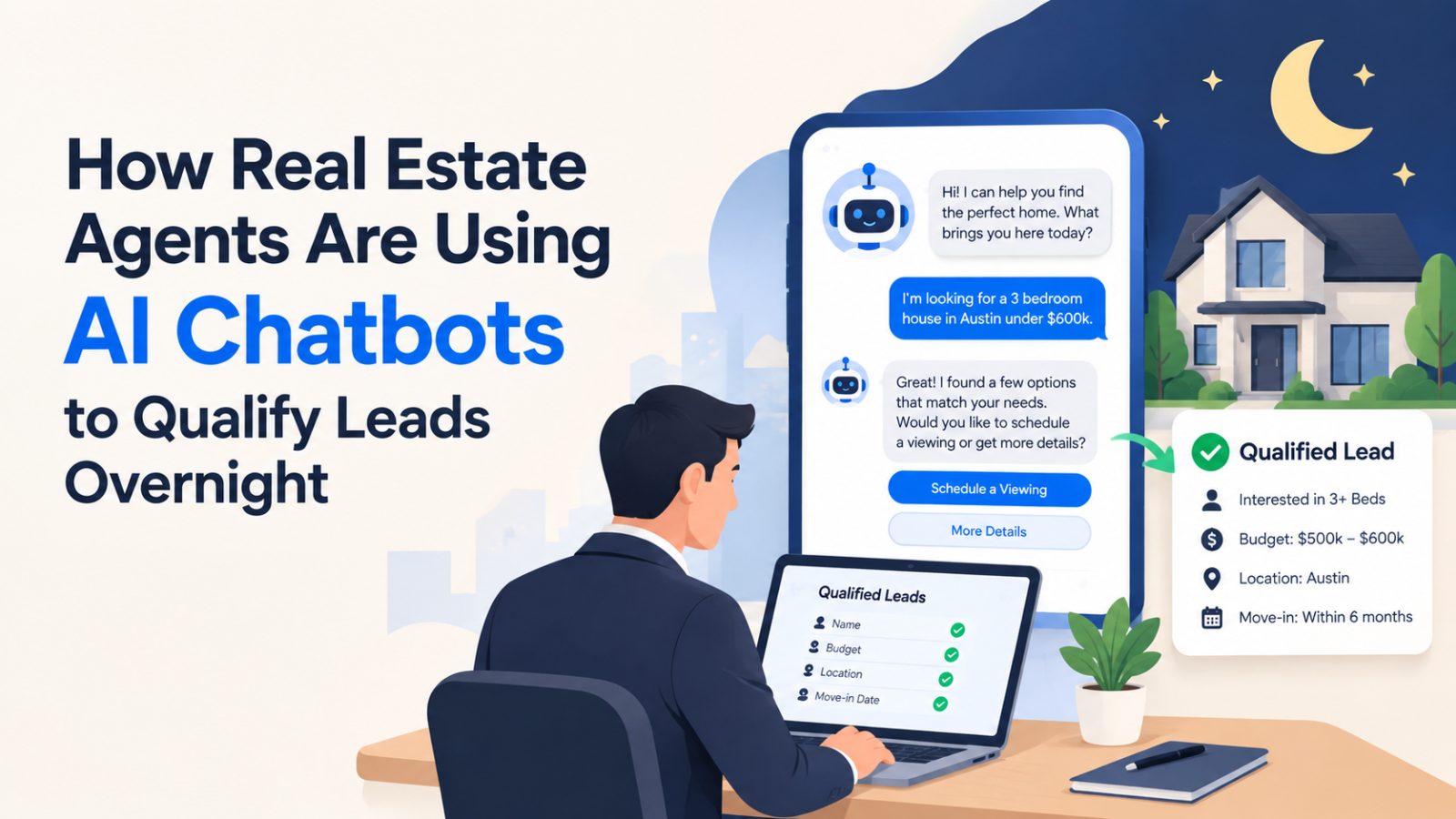
Real estate websites have a simple problem that is easy to overlook: people visit at all hours, but agents don't work at all hours.
Real estate websites have a simple problem that is easy to overlook: people visit at all hours, but agents don't work at all hours.
A potential buyer might find a property at 11 PM, browse a few photos, and have a question about the price, location, amenities, or availability. If nobody answers, they can simply leave the website and continue their search somewhere else.
This is where an AI chatbot for real estate can make a practical difference.
Instead of forcing every visitor to fill out a form or wait for an agent to respond, an AI chatbot can answer common questions immediately, start a conversation, collect contact details, and help identify visitors who are genuinely interested in a property.
The important part, however, is choosing the right kind of chatbot. A basic bot that replies with generic information isn't particularly useful for a real estate business. The better approach is to give the chatbot access to your own property information, FAQs, policies, and business data so that it can have conversations that actually relate to what you sell.
What Is an AI Chatbot for Real Estate?
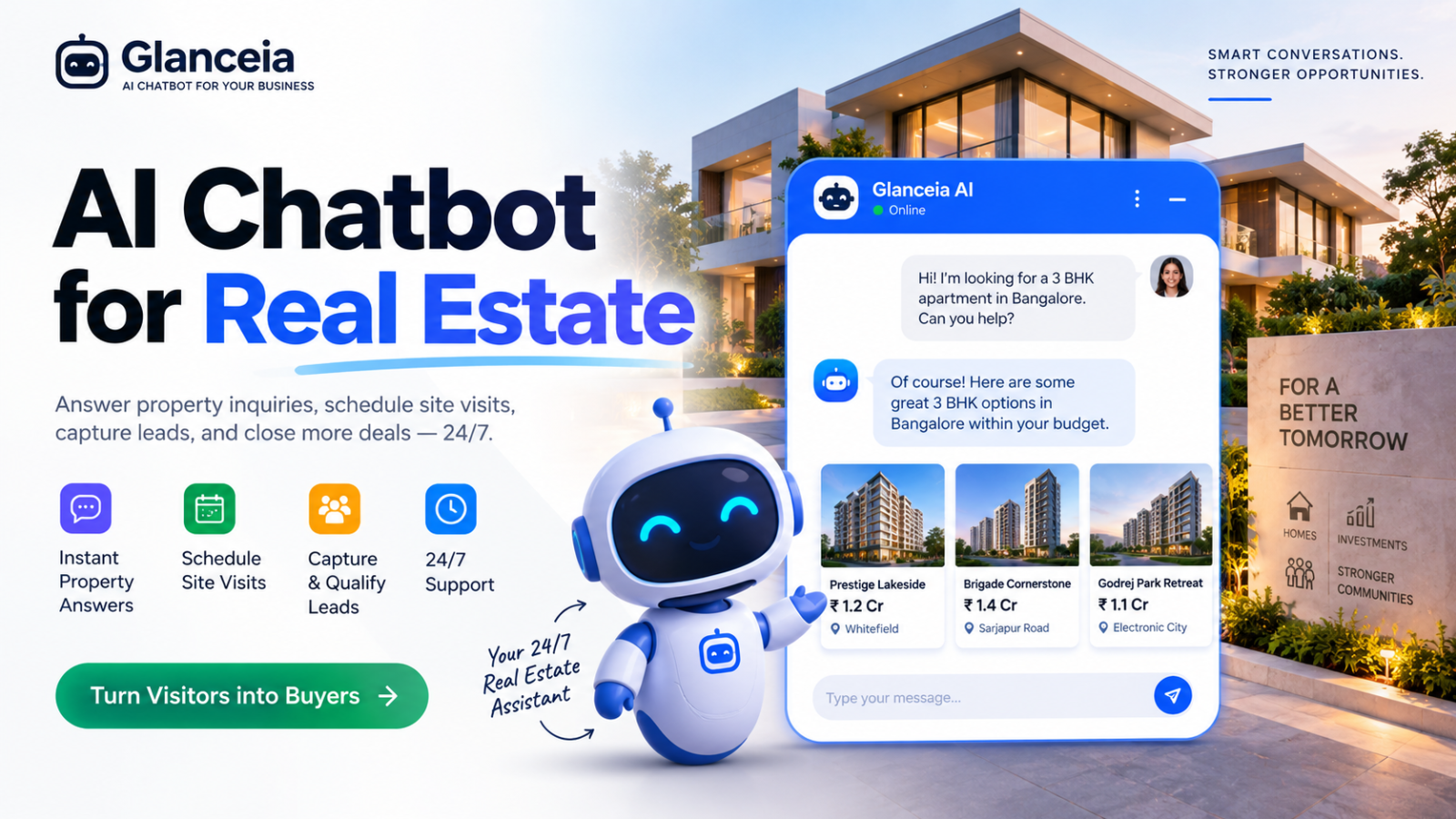
An AI chatbot for real estate is a conversational assistant that lives on a property website and interacts with visitors in real time.
Depending on how it is configured, the chatbot can help visitors with questions such as:
What is the price of this property?
How many bedrooms does it have?
Is parking available?
Where is the property located?
What amenities are included?
Is the property available for viewing?
Do you have similar properties in this price range?
How can I contact an agent?
But answering questions is only one part of the job.
A useful real estate chatbot can also collect information from prospective buyers or sellers, such as their name, email, phone number, preferred location, budget, property type, and requirements.
That turns the chatbot from a simple support widget into a lead-generation tool.
Why Real Estate Websites Need Chatbots
Buying or selling property isn't a quick decision. People spend time researching neighborhoods, comparing properties, checking prices, and looking for answers before they ever speak with an agent.
That means your website may receive visitors who are interested but aren't ready to call you immediately.
A chatbot gives these visitors another way to interact.
Instead of asking them to find your phone number or complete a long contact form, you can start with a simple question:
“Looking for a property? Tell me what you're searching for.”
The visitor can respond naturally, and the conversation can continue from there.
This is especially useful outside normal business hours. Recent real-estate chatbot discussions increasingly focus on lead qualification and immediate engagement rather than using bots only as FAQ widgets.
7 Ways an AI Chatbot Can Help a Real Estate Business
1. Answer Property Questions 24/7
Real estate websites contain a lot of information, but visitors don't always want to search through multiple pages to find it.
A chatbot can provide a conversational way to access that information.
For example:
Visitor:
“Does the 3-bedroom apartment include parking?”
Chatbot:
“Yes. The property includes two parking spaces.”
That interaction may take only a few seconds, but it can prevent the visitor from leaving the website because they couldn't find an answer.
A chatbot can also handle repetitive questions about locations, amenities, pricing, office hours, viewing processes, and other frequently requested information.
2. Capture Leads Before They Leave
One of the biggest advantages of adding a chatbot to a real estate website is that it can start a conversation before asking for contact information.
Instead of showing a form that says:
Name → Email → Phone → Submit
you can make the process feel more natural.
For example:
Chatbot:
“Are you looking to buy, rent, or sell a property?”
Visitor:
“Buy.”
Chatbot:
“What area are you interested in?”
Visitor:
“Dubai Marina.”
Chatbot:
“Great. What's your approximate budget?”
At this point, you've learned considerably more than you would from a generic form.
The chatbot can then request the visitor's contact information so an agent can follow up.
3. Qualify Potential Buyers
Not every website visitor is equally valuable.
One person may simply be browsing. Another may be ready to schedule a property viewing this week.
An AI chatbot can ask qualification questions that help your sales team understand the difference.
For example:
Buying or selling?
Preferred location?
Budget?
Property type?
Number of bedrooms?
Expected timeline?
The answers create useful context for the agent.
Instead of receiving an email that simply says “I'm interested,” your team could receive something closer to:
Buyer looking for a 2-bedroom apartment in Downtown Dubai, budget up to $350,000, planning to purchase within the next three months.
That's a much more actionable lead.
4. Reduce Repetitive Work for Agents
Real estate agents spend a surprising amount of time answering questions that have already been answered dozens of times.
A chatbot can handle many of those repetitive conversations automatically.
That doesn't mean replacing your agents.
It means letting the chatbot take care of basic questions while your team focuses on conversations where human expertise matters.
The distinction is important.
Real estate is still a relationship-driven business. Buyers and sellers often need negotiation, advice, reassurance, and personal guidance. A chatbot should support that process, not attempt to replace it.
5. Help Visitors Find Relevant Information Faster
A property website can contain hundreds of pages.
A visitor might know what they want but have no idea where to find it.
A conversational assistant can act as a shortcut.
For example:
“I'm looking for a family home near a good school, under $500,000.”
Instead of making the visitor browse category pages manually, the chatbot can ask follow-up questions and direct them toward relevant information.
This creates a more natural website experience.
6. Support Visitors in Multiple Languages
Real estate businesses often serve people from different cities and countries.
A multilingual chatbot can make it easier for international visitors to ask questions in a language they are comfortable using.
This becomes particularly useful for property developers, agencies working with international buyers, and businesses operating across multiple markets.
Glanceia, for example, currently states that its chatbot supports more than 95 languages.
7. Give Your Team Better Insight Into Visitor Questions
Your website analytics might tell you how many people visited a property page.
A chatbot can reveal something different:
What are people actually asking?
Maybe visitors repeatedly ask about parking.
Maybe everyone wants to know whether pets are allowed.
Maybe a particular property receives many questions about financing.
These conversations can reveal gaps in your website content.
Over time, those insights can help you improve your property pages, FAQs, sales process, and marketing strategy.
What Makes a Good Real Estate AI Chatbot?
Not every chatbot is suitable for a property business.
A good real estate chatbot should be able to work with your own business information rather than relying entirely on generic AI knowledge.
This matters because property information changes.
Prices change.
Availability changes.
Amenities differ.
Policies differ.
Locations differ.
A chatbot that invents an answer or gives outdated information can do more harm than good.
Ideally, your chatbot should be connected to a controlled knowledge base containing the information you actually want it to use.
Why Generic Chatbots Often Fall Short
Imagine asking your website chatbot:
“What's the deposit for this apartment?”
A generic AI chatbot may know how deposits generally work in real estate, but that doesn't mean it knows your company's policy.
That's the problem with using a chatbot without business-specific information.
A better system is grounded in your own data.
For example, Glanceia allows businesses to upload documents and create a custom knowledge base so the chatbot can answer questions using company-specific information. Its current platform supports sources such as PDFs, documents, CSVs, and FAQs.
For a real estate business, that information could include:
Property details
Pricing information
Amenities
Frequently asked questions
Company policies
Contact information
Location information
Sales or rental information
Viewing instructions
The goal isn't to make the chatbot sound intelligent.
The goal is to make it useful.
How Glanceia Can Be Used as a Real Estate Chatbot
Glanceia is an AI chatbot builder designed to turn a company's information into a website chatbot.
For a real estate company, you could create a knowledge base containing your property information and FAQs, customize the chatbot to match your brand, and embed it directly on your website.
Glanceia's current setup flow is built around three steps: add your business data, customize the chatbot, and deploy it to your website. The company says the widget can be added with a single line of code.
That can be useful for smaller agencies that don't want to build an AI chatbot from scratch.
Example Real Estate Conversation
Here is what a simple conversation could look like:
Visitor:
“Hi, I'm looking for a 2-bedroom apartment in Mumbai.”
Glanceia:
“Sure! What's your approximate budget?”
Visitor:
“Up to ₹1.5 crore.”
Glanceia:
“Got it. Are you looking for a ready-to-move property or something under construction?”
Visitor:
“Ready to move.”
Glanceia:
“I can help with that. Would you like an agent to contact you with matching properties?”
Visitor:
“Yes.”
The chatbot can then collect the visitor's details.
That's a much more useful interaction than simply displaying:
“Welcome! How can I help you?”
Setting Up Glanceia for a Real Estate Website
You don't need to build your own AI system from scratch.
A basic setup could look like this:
Step 1: Add Your Business Information
Upload your FAQs, property documents, or other relevant information to your knowledge base.
Step 2: Customize the Chatbot
Match the chatbot's appearance to your real estate brand.
You can customize aspects such as colors, avatar styling, position, and the chatbot's tone.
Step 3: Add It to Your Website
Once configured, embed the chatbot into your website.
Glanceia currently uses a lightweight website widget approach, allowing the chatbot to be deployed through an embed script.
AI Chatbot vs. Traditional Contact Forms
Contact forms aren't useless.
They are simply limited.
A traditional form might tell you:
John | john@example.com | Interested in property
A chatbot can potentially tell you:
John is looking for a 3-bedroom property in Bangalore, budget around ₹1 crore, prefers a ready-to-move home, and wants to schedule a viewing this weekend.
The second example gives the sales team considerably more context.
That doesn't mean every visitor should be forced into a long conversation. The best implementation keeps the interaction simple and lets visitors move to a human whenever necessary.
AI Chatbot vs. Human Real Estate Agent
This isn't really an either-or decision.
The strongest setup is usually:
AI handles the first conversation.
Human handles the important conversation.
The chatbot can answer routine questions, collect information, and identify intent.
The agent can then step in when the visitor wants:
A property recommendation
A viewing
Negotiation
Financing guidance
Detailed property advice
A sales consultation
This combination keeps the speed of automation without removing the human side of real estate.
What Should You Measure?
Adding a chatbot isn't enough.
You need to know whether it is actually helping your business.
Some useful metrics include:
Chat conversations: How many visitors interact with the chatbot?
Lead capture rate: How many conversations result in contact information?
Qualified leads: How many visitors meet your target criteria?
Common questions: What information do visitors ask for most?
Conversion rate: How many chatbot-generated leads eventually become customers?
Drop-off points: At what stage are visitors leaving the conversation?
Glanceia also includes analytics capabilities designed to help businesses understand chatbot activity and conversation trends.
Common Mistakes to Avoid
Making the chatbot too aggressive
Opening every conversation with:
“Give me your phone number!”
is rarely a great experience.
Start by helping the visitor.
Giving the chatbot too much freedom
For real estate, accuracy matters.
Your chatbot should have clear information and boundaries around what it can answer.
Trying to replace agents completely
Some questions require human judgment.
Give visitors an easy path to a person.
Ignoring the mobile experience
A large percentage of property browsing happens on mobile devices, so your chatbot should be easy to open, read, and use on smaller screens.
Making the chatbot generic
A chatbot that sounds identical to every other website isn't particularly memorable.
Use your company's tone, terminology, and property information.
Is an AI Chatbot Worth It for Real Estate?
For many real estate businesses, the biggest potential benefit isn't that a chatbot is “AI.”
It's that someone is available to respond when your team isn't.
A visitor doesn't necessarily care whether the answer came from artificial intelligence.
They care about getting an answer.
They care about finding the right property.
And, eventually, they care about talking to someone who can help them move forward.
That's why the best real estate chatbot strategy isn't about putting an AI icon in the corner of a website and calling the job finished.
It's about designing a better first interaction with every potential customer.
Final Thoughts
An AI chatbot for real estate can help agencies, brokers, developers, and property websites provide instant answers, capture leads, qualify prospects, and keep conversations moving outside normal office hours.
But the technology itself isn't the strategy.
The strategy is using the chatbot to remove friction from the buyer journey.
Instead of asking visitors to search through pages, fill out forms, or wait for a callback, you can give them an immediate conversational path.
For businesses that want to try this without developing a chatbot from scratch, Glanceia is one option worth exploring. It lets you build a chatbot around your own business information, customize its appearance and behavior, and add it to your website. Glanceia currently offers a free plan, so businesses can test the experience before committing to a paid plan.
Try Glanceia for your real estate website and turn more website conversations into real opportunities.