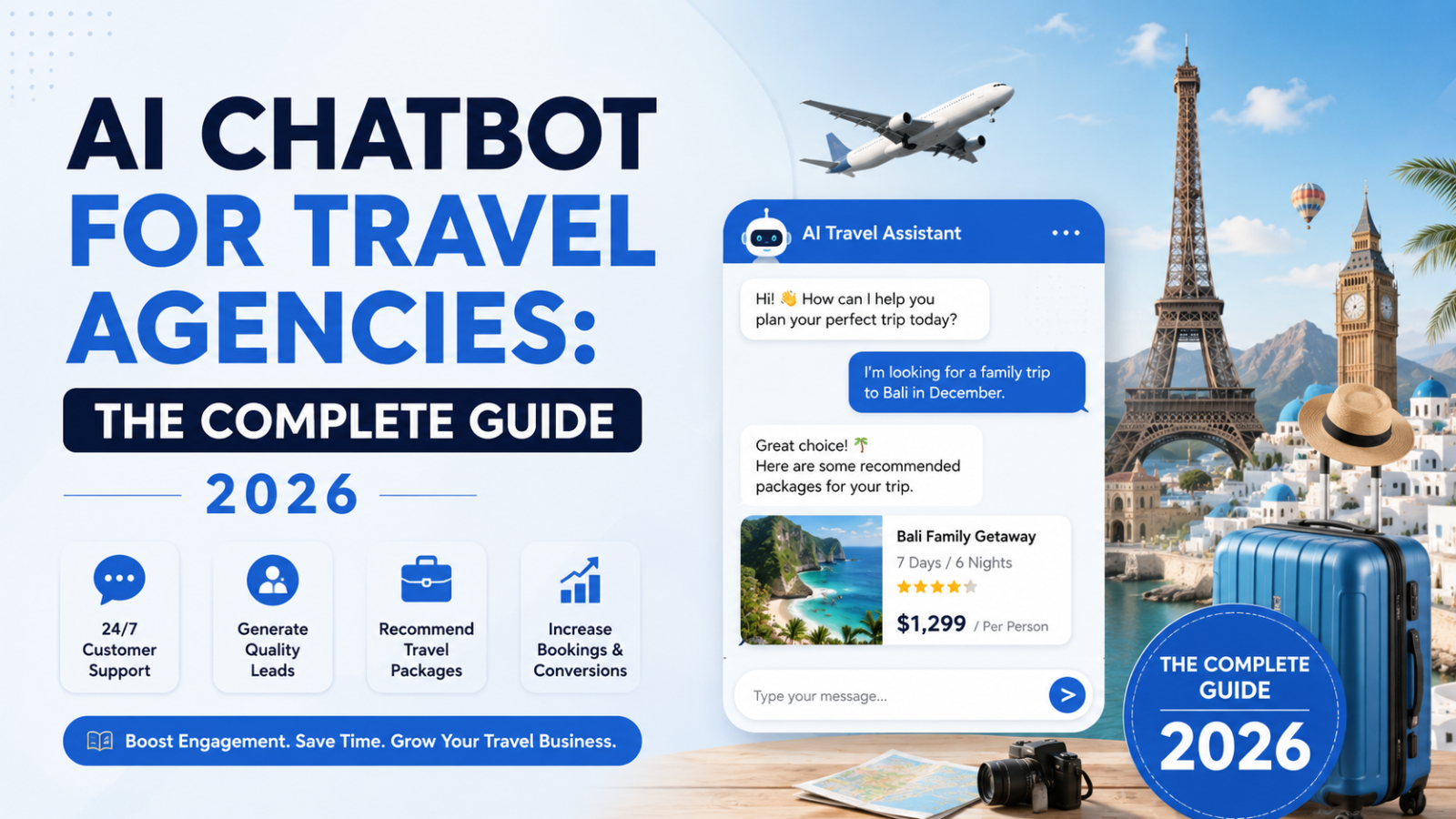
AI Chatbot for Travel Agencies: The Complete Guide 2026
Discover how an AI chatbot for travel agencies can automate customer support, increase bookings, qualify leads, and provide 24/7 assistance. Learn benefits, features, and implementation tips.
The travel industry has changed dramatically over the last few years. Travelers now expect instant responses, personalized recommendations, and seamless booking experiences—regardless of the time of day.
Unfortunately, many travel agencies still rely on traditional contact forms, delayed email replies, or business-hour support. Every unanswered question increases the chances that a potential customer will book with a competitor.
This is where an AI chatbot for travel agencies becomes a game-changer.
Modern AI-powered chatbots don't simply answer FAQs. They qualify leads, recommend destinations, provide pricing information, capture inquiries, schedule consultations, and deliver instant support 24 hours a day.
In this guide, you'll learn how AI chatbots work, why travel agencies are adopting them, the features to look for, and how to implement one successfully.
What Is an AI Chatbot for Travel Agencies?
An AI chatbot for travel agencies is an intelligent virtual assistant that lives on your website and communicates with visitors in natural language.
Instead of waiting for your team to respond, visitors receive immediate answers to questions such as:
What tour packages are available?
Do you offer honeymoon packages?
Can I customize my itinerary?
What documents are required?
What are your cancellation policies?
How much does a package cost?
Can someone call me?
Unlike traditional chatbots that rely on rigid decision trees, AI chatbots understand customer intent and generate conversational responses based on your business information.
Why Travel Agencies Need AI Chatbots
Today's customers expect immediate assistance.
If they don't receive answers within a few minutes, they often continue searching elsewhere.
An AI chatbot ensures your business never misses those opportunities.
Benefits include:
24/7 customer support
Faster response times
Increased lead generation
Reduced customer support workload
Higher website engagement
Improved booking conversions
Better customer satisfaction
Rather than replacing your sales team, AI works alongside them by handling repetitive questions and forwarding qualified leads.
Common Problems Travel Agencies Face
Many agencies experience challenges such as:
Slow Response Times
Potential travelers often compare multiple agencies.
The first agency to respond usually has the greatest chance of winning the booking.
Repetitive Questions
Your team may answer the same questions hundreds of times each month:
Visa requirements
Package pricing
Hotel options
Payment methods
Cancellation policies
These repetitive conversations consume valuable time.
Lost Leads After Business Hours
Most websites continue receiving visitors even when the office is closed.
Without an AI chatbot, those visitors often leave without contacting anyone.
High Customer Support Costs
As inquiries increase, agencies often hire more support staff.
AI can automate a significant portion of routine conversations, allowing your team to focus on high-value customers.
How AI Chatbots Help Travel Agencies
1. Answer Customer Questions Instantly
Customers receive immediate responses without waiting for emails or phone calls.
Fast answers increase trust and encourage visitors to continue their booking journey.
2. Capture Qualified Leads
Instead of displaying only a contact form, an AI chatbot can ask:
Where would you like to travel?
How many travelers?
What's your budget?
Preferred travel dates?
Destination interests?
These details help your sales team prioritize high-quality leads.
3. Recommend Travel Packages
AI chatbots can guide visitors toward suitable options.
Example:
Customer:
"I'm planning a honeymoon in December."
Chatbot:
"Congratulations! Based on your travel dates, you may enjoy our Maldives, Bali, and Mauritius honeymoon packages. Would you like pricing or itinerary details?"
This personalized experience improves conversion rates.
4. Collect Contact Information
When visitors are ready to learn more, the chatbot can collect:
Name
Email
Phone number
Destination
Budget
Preferred dates
This information is automatically stored for follow-up.
5. Reduce Support Workload
Many customer questions are repetitive.
Instead of answering them manually every day, AI provides consistent responses while your team focuses on bookings and customer relationships.
Key Features to Look for in an AI Travel Chatbot
Not every chatbot is suitable for travel businesses.
Look for features such as:
Natural AI Conversations
Visitors should feel like they're chatting with a knowledgeable travel consultant rather than navigating a menu.
Knowledge Base Training
The chatbot should learn from:
Travel packages
FAQs
Website content
Policies
Destination guides
Multi-Language Support
Travel customers often come from different countries.
Supporting multiple languages creates a better customer experience.
Lead Capture
Your chatbot should automatically collect visitor information for follow-up.
Human Handoff
Complex conversations should transfer smoothly to your support team when necessary.
Analytics
Track:
Total conversations
Leads captured
Frequently asked questions
Customer satisfaction
Conversion performance
These insights help improve your marketing and sales process.
Real-World Use Cases
Tour Operators
Answer itinerary questions instantly.
Visa Consultants
Provide document requirements and consultation booking.
Hotel Booking Agencies
Recommend hotels based on destination and budget.
Corporate Travel Agencies
Handle business travel inquiries efficiently.
Cruise Agencies
Recommend cruises based on travel preferences.
Adventure Travel Companies
Suggest trekking, wildlife, scuba diving, and adventure packages.
How to Add an AI Chatbot to Your Travel Website
Implementation is easier than many businesses expect.
Step 1
Choose an AI chatbot platform designed for business websites (Glanceia.com)
Step 2
Train the chatbot using:
Package information
FAQs
Company policies
Destination content
Pricing information
Step 3
Customize branding to match your website.
Step 4
Install a simple code snippet on your website.
Step 5
Monitor conversations and continually improve responses.
Most agencies can have a chatbot running within a single day.
Best Practices
To maximize results:
Keep responses clear and conversational.
Update your knowledge base regularly.
Add strong calls to action.
Monitor unanswered questions.
Connect your chatbot with your CRM.
Review analytics monthly.
Offer human assistance when needed.
Measuring Success
Track metrics such as:
Website conversations
Leads generated
Booking inquiries
Response time
Customer satisfaction
Conversion rate
Support tickets reduced
These metrics help determine your chatbot's impact on business growth.
Frequently Asked Questions
Can AI chatbots replace travel agents?
No.
AI handles repetitive questions and lead qualification, while travel experts provide personalized planning and close bookings.
Can an AI chatbot recommend travel packages?
Yes.
Modern AI chatbots can recommend packages based on destination, budget, travel dates, interests, and customer preferences.
Is an AI chatbot available 24/7?
Yes.
One of the biggest advantages is that visitors receive immediate assistance at any time, even outside business hours.
Can AI chatbots generate leads?
Absolutely.
They can collect names, phone numbers, email addresses, travel preferences, and budgets before passing qualified leads to your team.
Does an AI chatbot work with existing travel websites?
Most modern chatbot platforms integrate easily with WordPress, Shopify, Webflow, custom websites, and other content management systems using a simple installation script.
Why More Travel Agencies Are Investing in AI
Travelers expect fast, personalized service.
Businesses that continue relying only on contact forms or delayed email responses risk losing potential customers to competitors who respond instantly.
An AI chatbot helps travel agencies:
Convert more visitors into leads
Provide around-the-clock support
Reduce repetitive customer inquiries
Improve customer experience
Scale operations without significantly increasing support costs
As AI technology continues to evolve, chatbots are becoming an essential part of modern travel websites rather than an optional feature.
Conclusion
An AI chatbot for travel agencies is more than a customer support tool—it's a digital travel assistant that works around the clock to engage visitors, answer questions, qualify leads, and support your sales team.
Whether you're a boutique travel consultant or a large agency managing hundreds of inquiries each month, implementing an AI chatbot can improve efficiency while creating a smoother experience for your customers.
If you're looking for an easy way to add AI-powered conversations to your travel website, Glanceia enables travel agencies to deploy intelligent chatbots that answer questions, capture leads, and support customers 24/7 with minimal setup.
The future of travel is fast, personalized, and always available. An AI chatbot can help your agency stay ahead by delivering the instant assistance today's travelers expect.