Everyone Says AI Chatbots Feel Robotic. Ours Doesn't. Here's the Difference.
The word "chatbot" still makes people think of stiff, scripted replies. That reputation is outdated — here's exactly what changed, and why it matters.
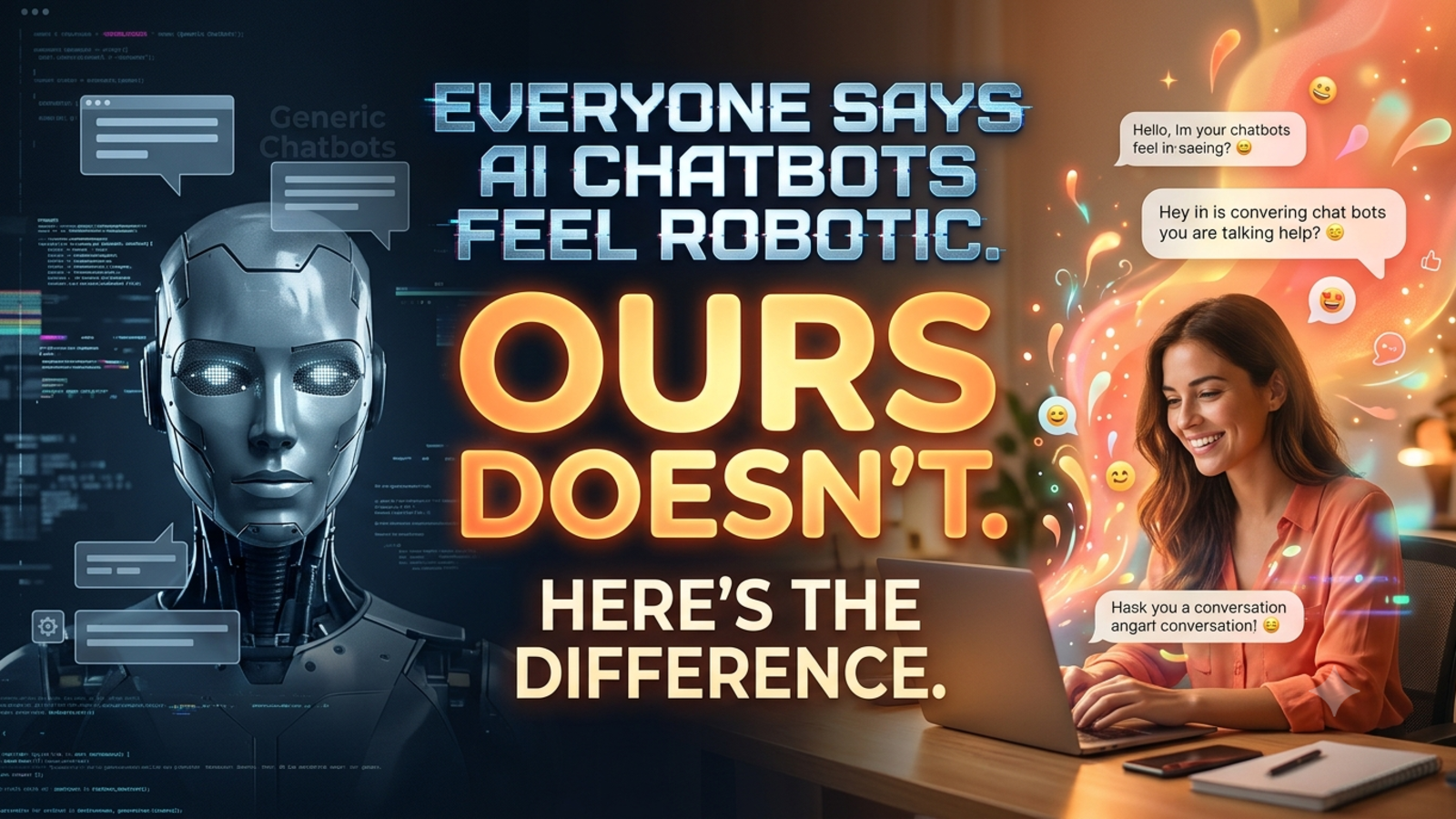
Say the word "chatbot" to most people, and they picture the same thing: a stiff pop-up asking "How can I help you today?" followed by a menu of buttons, none of which quite match what they actually wanted to ask. Type a real question, and it either loops back to the same three options or dumps you into a "please contact support" dead end. That reputation is earned — a lot of chatbots really were built that way, and plenty still are.
But that reputation is also increasingly outdated, and it's worth being specific about why, instead of just asserting it.
Where the "Robotic" Reputation Actually Comes From
The chatbots that built this reputation were mostly decision-tree systems dressed up to look conversational. Underneath the chat bubble, they were following a fixed script: match keywords in the visitor's message to a pre-written response, and if nothing matches, fall back to a generic "I didn't understand that" message. They weren't actually reading or understanding the question — they were pattern-matching against a narrow list of anticipated phrasings.
That's why they felt robotic. It wasn't the chat interface itself — it was that the "intelligence" behind it was really just a flowchart, unable to handle anything slightly outside the exact wording it was programmed to recognize.
What Actually Changed
The shift isn't cosmetic — it's the underlying technology answering the question. A chatbot built on a modern language model isn't matching keywords to a script; it's genuinely reading the question, understanding what's actually being asked even when it's phrased unusually, and generating a real, specific answer from actual source material — the business's own FAQs, pricing, and policies — instead of picking from a fixed list of pre-written replies.
This is the actual difference between "feels robotic" and "feels like getting a real answer": a scripted bot can only ever say what someone anticipated in advance. A chatbot built on a real language model, trained on a business's actual content, can handle the question nobody thought to script for — because it's not matching phrasing, it's understanding intent.
What This Looks Like in an Actual Conversation
Ask an old-style chatbot "do you have anything for a group of six in December," and there's a good chance it either doesn't recognize the phrasing or routes you to a generic pricing page that doesn't actually answer the question. Ask the same thing to a chatbot trained on real business data — like Glanceia — and it reads the question as a whole, checks it against the actual availability and group-pricing information it was given, and answers specifically: whether that's available, what the group rate is, what's included.
That's not a scripted response matched to a keyword. It's an actual answer, generated from real information, to the specific question that was asked — phrased however the visitor happened to phrase it.
Why "Trained on Your Own Data" Is the Part That Actually Matters
A lot of the "robotic" feeling doesn't just come from rigid scripting — it comes from generic answers that clearly aren't specific to the business being asked about. A chatbot that gives a vague, one-size-fits-all response feels exactly as impersonal as one following a flowchart, even if the underlying tech is more advanced.
This is why Glanceia is built to answer only from what a business actually uploads — its real FAQs, pricing, policies — rather than pulling from generic internet knowledge about "businesses like this one." The answers end up feeling specific and accurate because they are specific and accurate, tied directly to what the business actually offers, not an approximation of it.
It's Not Just About Sounding Natural
Feeling less robotic isn't only about tone — it's about whether the chatbot can actually help. A bot that sounds friendly but still can't answer anything outside its script is still frustrating, just with a warmer voice attached. The meaningful shift is functional: can it actually understand an unusual question and give a real, accurate answer, instead of just sounding pleasant while failing to help.
That's the bar worth judging a chatbot against — not "does it sound human," but "can it actually answer what I asked, the way I asked it."
Why This Distinction Matters for a Business Choosing One
If you've written off chatbots because of a bad experience with an older, scripted one, it's worth revisiting that assumption — the category has genuinely changed underneath the same name. The practical test: ask it something specific and slightly unusual, the way a real customer actually would, not a simple test question. A scripted bot will fumble. One built on a real model, trained on your actual content, will answer it directly.
The Bottom Line
The "robotic chatbot" reputation was earned by a specific kind of technology — rigid, scripted, keyword-matching systems — not by the category as a whole. What's replaced it can actually read a question, understand what's being asked, and answer specifically from a business's real information. The difference isn't cosmetic. It's the difference between a flowchart and an actual answer.
Want to see the difference for yourself? Glanceia is trained on your own business data and answers real questions the way a real answer sounds — free to start. Get in touch if you want to try it with your own toughest customer questions.