AI Chatbots for Healthcare: Benefits, Use Cases, Challenges & Future Trends
Healthcare is rapidly embracing artificial intelligence to improve patient care, reduce administrative workload, and provide faster access to medical information. Among the most impactful innovations are AI chatbots for healthcare.
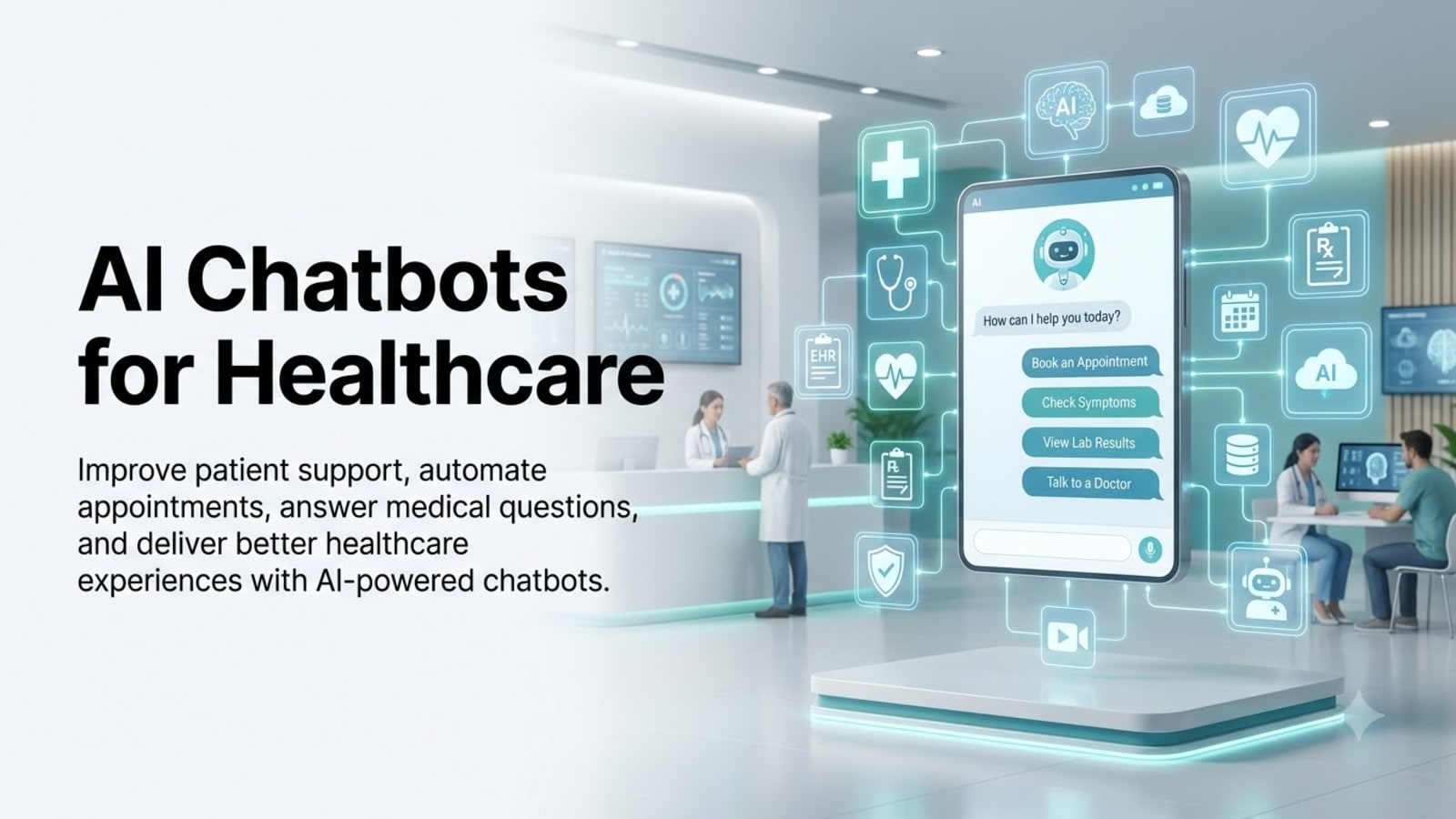
Healthcare is rapidly embracing artificial intelligence to improve patient care, reduce administrative workload, and provide faster access to medical information. Among the most impactful innovations are AI chatbots for healthcare. These intelligent virtual assistants help hospitals, clinics, telemedicine providers, and healthcare organizations automate patient interactions while improving the overall patient experience.
From answering frequently asked questions to scheduling appointments and assisting with symptom assessments, AI-powered healthcare chatbots are transforming how medical organizations communicate with patients. As patient expectations continue to rise, healthcare providers are increasingly turning to conversational AI to deliver personalized support 24/7.
In this comprehensive guide, we'll explore what healthcare AI chatbots are, how they work, their benefits, common use cases, challenges, and why they are becoming an essential tool for modern healthcare organizations.
What Is an AI Chatbot for Healthcare?
An AI healthcare chatbot is an intelligent virtual assistant that uses artificial intelligence and natural language processing (NLP) to communicate with patients in a conversational way. Unlike traditional rule-based chatbots that rely on predefined responses, AI-powered chatbots understand context, interpret user intent, and provide more natural and accurate responses.
Healthcare organizations use AI chatbots to:
Answer patient questions
Schedule medical appointments
Provide medication reminders
Share clinic information
Collect patient information
Guide patients through healthcare services
Support telemedicine platforms
Reduce administrative tasks
Rather than replacing healthcare professionals, AI chatbots assist medical staff by handling repetitive inquiries, allowing doctors and nurses to focus on delivering quality patient care.
How AI Chatbots Work in Healthcare
Healthcare chatbots combine several AI technologies to provide intelligent responses.
These include:
Natural Language Processing (NLP)
Machine Learning
Knowledge Base Retrieval
Secure Patient Data Processing
Conversational AI Models
When a patient asks a question such as:
"What are your clinic hours?"
or
"Can I book an appointment with a dermatologist?"
the chatbot analyzes the user's intent, retrieves relevant information, and generates an appropriate response in seconds.
Modern AI chatbots can also integrate with:
Electronic Health Records (EHR)
Appointment scheduling systems
CRM software
Telemedicine platforms
Patient portals
Healthcare databases
This allows the chatbot to deliver personalized and context-aware conversations.
Benefits of AI Chatbots for Healthcare
1. 24/7 Patient Support
Healthcare questions don't stop after office hours.
AI chatbots provide immediate assistance around the clock, helping patients access information whenever they need it.
This significantly improves patient satisfaction while reducing pressure on customer support teams.
2. Faster Appointment Scheduling
Instead of waiting on hold, patients can schedule appointments directly through a chatbot.
The chatbot can:
Check doctor availability
Book appointments
Reschedule visits
Cancel appointments
Send confirmations
This creates a smoother patient experience.
3. Reduced Administrative Work
Administrative staff often spend hours answering repetitive questions.
Healthcare chatbots automate responses to common inquiries such as:
Clinic hours
Insurance information
Consultation fees
Available specialists
Office locations
Medical services
This allows staff to focus on more important responsibilities.
4. Improved Patient Engagement
Patients are more likely to stay engaged when communication is quick and convenient.
AI chatbots help healthcare providers maintain ongoing communication by sending:
Medication reminders
Appointment reminders
Wellness tips
Follow-up messages
Preventive care recommendations
5. Better Lead Generation for Private Clinics
Private hospitals and healthcare providers often lose potential patients because inquiries go unanswered outside business hours.
An AI chatbot captures visitor information, answers questions instantly, and encourages appointment bookings—helping clinics convert more website visitors into patients.
6. Reduced Wait Times
Patients no longer need to wait for a receptionist to answer simple questions.
The chatbot handles routine inquiries instantly while forwarding complex cases to human staff.
This reduces queues and improves operational efficiency.
7. Multilingual Communication
Healthcare organizations serve diverse communities.
AI chatbots can communicate in multiple languages, helping patients receive important information in their preferred language.
This improves accessibility and inclusivity.
Common Use Cases of AI Chatbots in Healthcare
Appointment Booking
One of the most popular healthcare chatbot applications is appointment scheduling.
Patients can:
Choose departments
Select doctors
Pick available dates
Confirm appointments
Receive reminders
All without speaking to a receptionist.
Symptom Assessment
Many healthcare organizations use AI chatbots to provide preliminary symptom guidance.
Patients describe their symptoms, and the chatbot suggests possible next steps, such as:
Visiting a doctor
Seeking urgent care
Scheduling a consultation
It's important to note that these tools provide informational guidance and should not replace professional medical diagnosis.
Medication Reminders
Medication adherence is a major challenge.
AI chatbots help patients stay on track by sending reminders for:
Daily medication
Prescription refills
Vaccinations
Follow-up treatments
Patient FAQs
Healthcare websites receive countless repetitive questions.
Examples include:
What insurance do you accept?
Where is the clinic located?
What are your visiting hours?
Do I need an appointment?
How do I access my medical records?
An AI chatbot answers these questions instantly.
Telemedicine Support
AI chatbots enhance virtual healthcare by:
Assisting before consultations
Collecting patient information
Helping upload documents
Providing technical assistance
Following up after appointments
Insurance Assistance
Patients often have questions regarding insurance coverage.
Healthcare chatbots can explain:
Accepted insurance providers
Claim processes
Coverage information
Required documents
This reduces confusion and improves patient satisfaction.
AI Chatbots for Different Healthcare Organizations
Healthcare AI chatbots benefit a wide range of organizations.
These include:
Hospitals
Private Clinics
Dental Clinics
Eye Hospitals
Diagnostic Centers
Mental Health Services
Physiotherapy Clinics
Telemedicine Platforms
Medical Laboratories
Veterinary Clinics
Each organization can customize the chatbot according to its services and patient needs.
Data Privacy and Security
Healthcare organizations handle sensitive patient information.
A healthcare chatbot should prioritize:
Secure data storage
Encryption
User authentication
Role-based access controls
Compliance with applicable healthcare privacy regulations (such as HIPAA in the United States or other regional requirements)
Patients should always be informed about how their information is collected, stored, and used.
Challenges of AI Chatbots in Healthcare
Although AI chatbots offer many advantages, organizations should understand their limitations.
Medical Accuracy
Chatbots should never replace qualified healthcare professionals.
Responses should be based on trusted medical sources, and users should be encouraged to seek professional care for emergencies or personalized medical advice.
Privacy Concerns
Healthcare organizations must ensure patient information remains confidential and protected.
Implementing strong security measures is essential.
Complex Medical Cases
Some situations require human judgment.
Healthcare chatbots should seamlessly transfer conversations to healthcare professionals whenever necessary.
Continuous Updates
Medical knowledge evolves rapidly.
Healthcare chatbot knowledge bases should be regularly updated to maintain accuracy and relevance.
Future of AI Chatbots in Healthcare
The future of healthcare AI is promising.
Over the next few years, AI chatbots are expected to become even more intelligent through advances in large language models, predictive analytics, and voice-based interactions.
Future healthcare chatbots may include:
Voice-enabled virtual health assistants
Personalized wellness coaching
Chronic disease management support
Mental health check-ins
AI-assisted patient education
Better integration with wearable health devices
Predictive appointment recommendations
More personalized healthcare experiences
As AI continues to evolve, chatbots will become valuable digital assistants that complement healthcare professionals while improving accessibility and efficiency.
Choosing the Right AI Chatbot for Healthcare
When selecting an AI chatbot for your healthcare organization, consider features such as:
AI-powered natural conversations
Easy website integration
Appointment booking support
Lead capture capabilities
Multi-language support
Custom knowledge base training
Analytics and reporting
Secure data handling
Human handoff for complex conversations
Custom branding options
The right solution should be easy to deploy, scalable, and tailored to your organization's workflows.
Why Glanceia Is a Smart Choice for Healthcare Providers
Healthcare organizations need an AI chatbot that is easy to implement, simple to manage, and capable of delivering accurate, helpful responses based on their own content.
Glanceia enables healthcare providers to create AI-powered website chatbots that can answer patient questions, assist with appointment inquiries, provide information about services, capture potential patient leads, and deliver 24/7 support—all without requiring extensive technical expertise.
With customizable branding, multilingual capabilities, analytics, and the ability to train the chatbot on your organization's own knowledge base, Glanceia helps hospitals, clinics, and healthcare providers improve patient communication while reducing repetitive administrative work.
Frequently Asked Questions
Can AI chatbots diagnose diseases?
No. AI chatbots can provide general health information or symptom guidance but should not replace a licensed healthcare professional for diagnosis or treatment.
Are healthcare chatbots secure?
They can be, provided they use strong security practices, encryption, access controls, and comply with applicable privacy regulations.
Can AI chatbots schedule appointments?
Yes. Many healthcare chatbots integrate with appointment systems to help patients book, reschedule, or cancel appointments.
Do AI chatbots work 24/7?
Yes. One of their biggest advantages is providing around-the-clock support, even outside regular clinic hours.
Can healthcare chatbots support multiple languages?
Yes. Many modern AI chatbots offer multilingual conversations, helping healthcare organizations serve diverse patient populations more effectively.
Conclusion
AI chatbots are transforming healthcare by making patient communication faster, more accessible, and more efficient. From answering common questions and scheduling appointments to supporting telemedicine and improving patient engagement, conversational AI is helping healthcare organizations deliver better experiences while reducing administrative workload.
As healthcare continues its digital transformation, AI chatbots will play an increasingly important role in connecting patients with the information and services they need. By choosing a secure, intelligent, and customizable solution like Glanceia, healthcare providers can streamline communication, enhance patient satisfaction, and build a more responsive healthcare experience for the future.