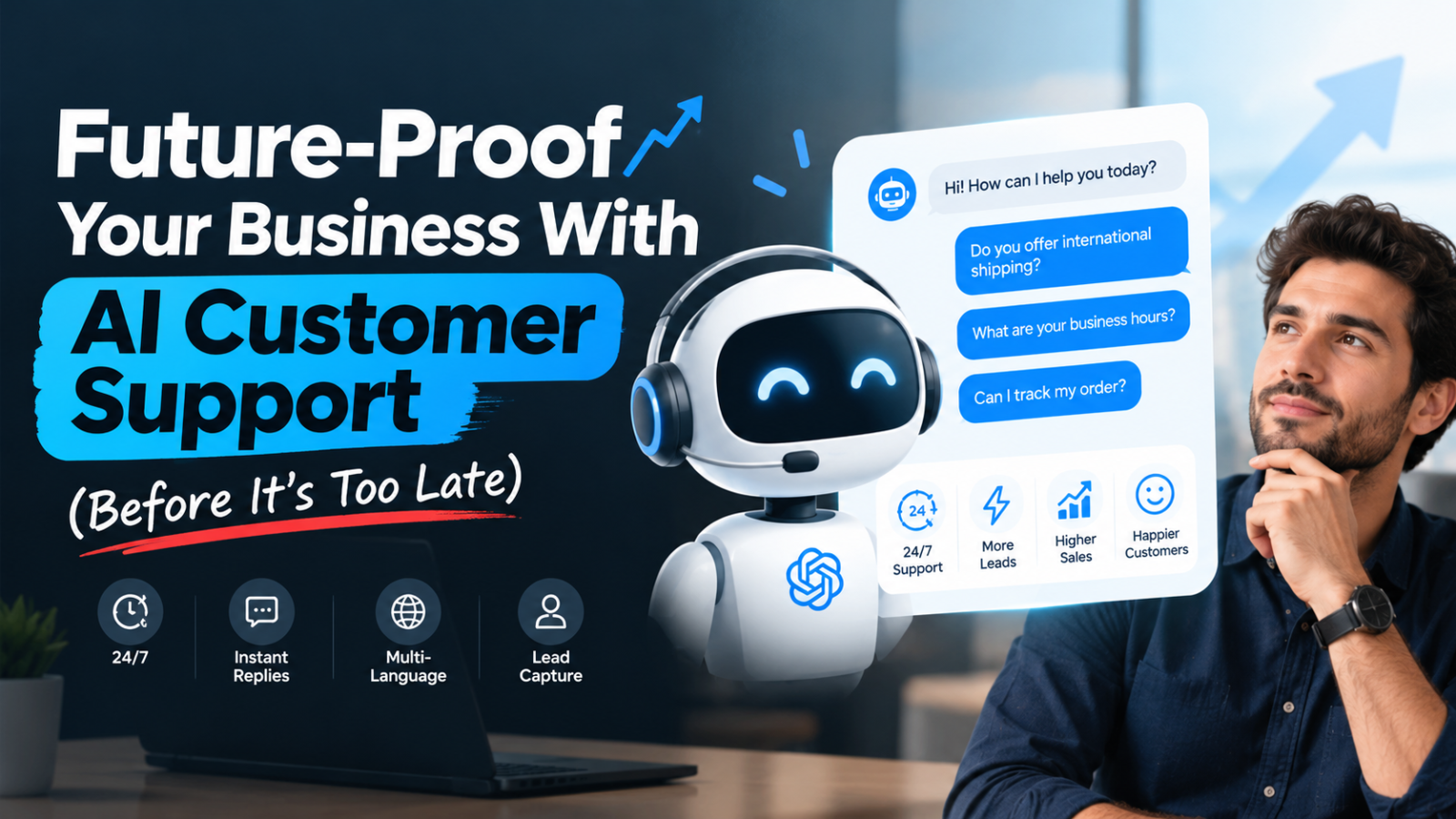
Future-Proof Your Business With AI Customer Support (Before It's Too Late)
The businesses that thrive in the next five years will not be the biggest or the best-funded. They will be the ones who got their customer support right before everyone else did.
The Business That Answered First Won
There is a story that comes up repeatedly when you talk to small business owners who have grown quickly in the last two years.
It is not a story about a better product. It is not about a bigger marketing budget or a viral social media moment. It is about response time.
A wedding photographer in Pune started getting significantly more bookings from her website without increasing her ad spend. A logistics consultant in Hyderabad doubled his monthly enquiries without changing his pricing. A boutique travel agency in Delhi started converting at nearly twice the rate of the previous year from the same organic traffic.
All three of them made the same change at roughly the same time. They stopped relying on manual responses and started letting AI handle the first contact.
The specifics differed. The result was the same. They were answering faster than their competitors. And in the current market, the business that answers first wins the customer at a rate that used to require a full sales team to achieve.
This is the core of what it means to future-proof your business with AI customer support. It is not about keeping up with technology trends. It is about closing the gap between when a customer has a question and when they get an answer — permanently, affordably, and in a way that scales without adding headcount.
What Is Actually Changing in Customer Support
The shift happening in customer support right now is not incremental. It is structural.
For most of the last twenty years, the customer support model for small businesses looked like this: someone contacts you, you respond when you can, the quality of the interaction depends on who answers that day and how their morning is going.
That model is being replaced — not in ten years, not when AI matures — right now. In 2026, 80 percent of companies are either using or actively planning to deploy AI customer support tools. The standard expectation customers bring to any business interaction is shifting from "I expect a response by end of day" to "I expect a response in the next few minutes."
That shift is not driven by large corporations with enormous technology budgets. It is being driven by thousands of small businesses who discovered that an AI-powered support system is not expensive, not complicated, and not something that requires a technical team to set up. It takes an afternoon.
The businesses that are falling behind are not the ones who cannot afford to change. They are the ones who have not yet decided to.
The Three Customer Expectations Reshaping the Market
Understanding what your customers now expect helps clarify what "future-proofed" actually means in practice.
Expectation One: Instant is the new fast.
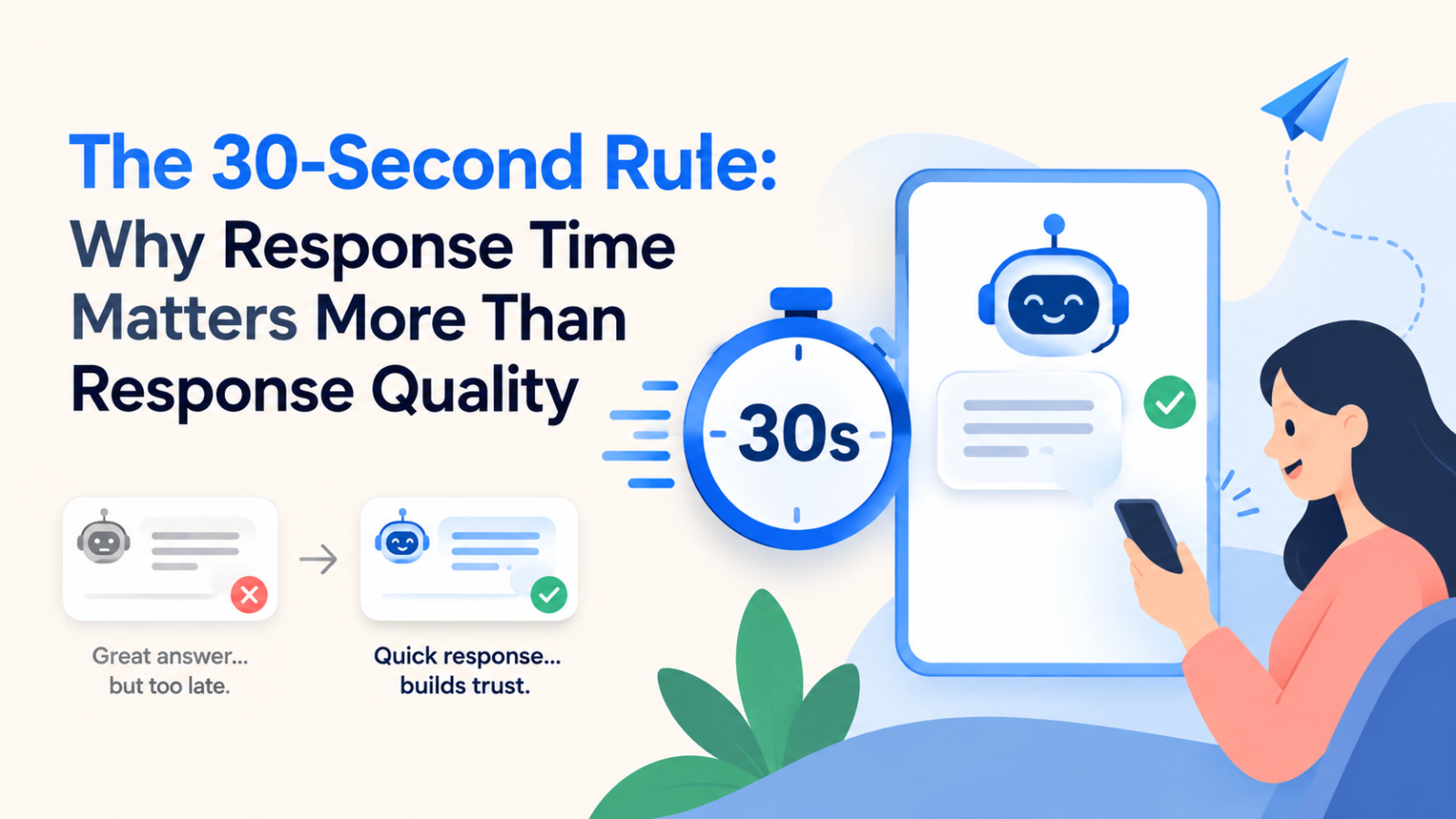
Three years ago, responding to a customer enquiry within a few hours was considered good service. Today it is considered slow. The baseline has moved — not because customers became impatient, but because they have experienced instant responses from AI-powered businesses and now compare everything to that standard.
A customer who messages your competitor at 9 PM and receives an immediate, accurate answer about pricing and availability has no reason to wait until 9 AM for your manual reply. You can have the better service, the better product, and the better price — and still lose the booking because you were not there when they asked.
Expectation Two: Availability is not a premium feature.
The assumption that customers will work around your business hours is dissolving rapidly. Customers make decisions when they are ready to make decisions — evenings, weekends, lunch breaks, commutes. The businesses that are available in those moments capture the sale. The businesses that are not often do not even know what they missed.
Expectation Three: The first interaction sets the tone for everything.
The quality of a customer's very first experience with your business — before they have bought anything, before they have spoken to anyone — shapes their expectation of everything that follows. A business whose first touchpoint is a helpful, knowledgeable, instant response starts the relationship from a position of credibility. A business whose first touchpoint is a contact form and a two-day wait starts from a deficit.
What Future-Proofing Actually Looks Like in Practice
The phrase "future-proof" tends to get used in a way that makes things sound more complicated and expensive than they are. So it is worth being concrete about what this actually looks like for a small or medium-sized business in 2026.
It looks like a chat window that opens on your website.
Not a complex AI system integration. Not a six-month technology project. A chat window in the bottom right corner of your website that opens when a visitor arrives, answers their question from your specific business content, and captures their contact details — automatically, at any hour.
The AI that powers it has been trained on your FAQ document, your pricing guide, your service descriptions, your policies. When someone asks a question your business can answer, it answers. When something genuinely needs a human, it provides a direct route to one.
It looks like your team getting back time.
One of the most consistent pieces of feedback from businesses that implement AI customer support is that their team's experience of work changes. The inbox that used to fill with the same twelve questions every week gradually thins out. The Monday morning catch-up that used to start with clearing a weekend's worth of enquiries becomes a list of pre-qualified leads with names, contact details, and specific questions already captured.
The team does not shrink. Their focus changes. They spend less time answering the same question repeatedly and more time having the kinds of conversations that actually require human judgment, empathy, and expertise.
It looks like leads you did not know you were missing.
The most surprising data point for most businesses when they first implement AI support is not what the AI handles during business hours. It is what it captures after hours.
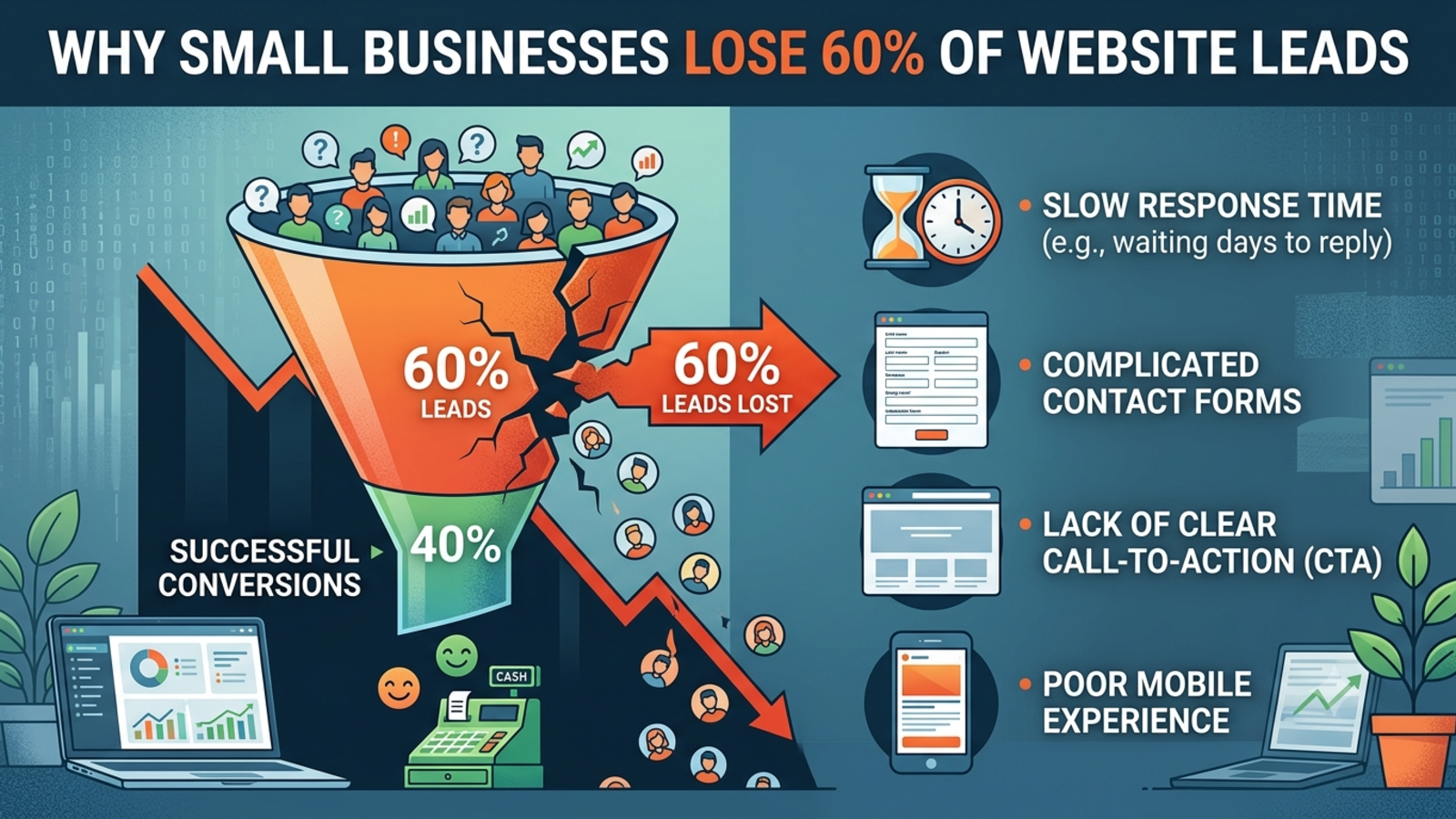
A significant proportion of website visitors — often 35 to 45 percent of potential enquiries — arrive outside of operational hours. Without AI support, those visitors encounter a website that cannot answer their question, fill in a contact form that sits overnight, or leave without making contact at all. With AI support, every one of those visitors gets an immediate, accurate response regardless of what time they arrive.
Those are not new visitors. They were already there. They were just not being converted.
The Competitive Moat You Can Build Right Now
There is a window in every technological shift where early adopters gain an advantage that is genuinely difficult for later movers to close.
We are in that window for AI customer support right now.
The businesses that implement AI support well over the next twelve months will accumulate something valuable: trained systems, refined knowledge bases, tested conversation flows, and actual data on what their customers need. They will also build customer relationships based on a consistency of availability that becomes part of their brand identity.
A customer who contacts your business at 11 PM and receives a helpful, knowledgeable response is not just satisfied with that interaction. They have formed an impression of your business as one that is available, professional, and responsive at a level that many of your competitors have not yet achieved.
That impression is not easily reversed by a competitor who eventually catches up with the same technology. First impressions compound.
The moat is not the technology itself — the technology will be broadly available to anyone who wants it. The moat is the accumulated advantage of having used it well, for longer, with more customer interactions shaping and refining the system.
The earlier you start, the wider that moat becomes.
What You Actually Need to Do Today
The good news is that the implementation barrier for AI customer support is much lower than most business owners expect. You do not need a technical team. You do not need a large budget. You do not need to redesign your website.
Here is the minimum viable version that produces real results:
Write your FAQ document properly.
Not the FAQ on your website, which is probably written for SEO rather than to actually answer questions. A real FAQ document — the 25 to 40 most common questions your customers and prospects ask, answered specifically and completely. Not "pricing varies — contact us." The actual price. Not "delivery times depend on location." The actual timeline by region.
This document becomes the brain of your AI support assistant. The quality of that document is the single biggest determinant of how useful the AI actually is.
Choose a tool that trains on your content and embeds on your website.
Not a general AI chatbot. Not a tool that answers from generic AI knowledge. A tool that reads your documents, learns from your specific business information, and answers visitor questions from your actual content.
Glanceia does exactly this. Free plan available — no credit card required. Upload your FAQ document and business content, customise the chat widget to match your brand, embed one line of code on your website, and you are live within 30 minutes. The AI answers from your documents. Lead capture collects visitor name and email automatically. Updates to your content take effect immediately without touching your website again.
Set up escalation to a human for what genuinely needs one.
Configure the AI to provide your email, phone, or WhatsApp for queries that fall outside what it can handle. The goal is not to automate everything — it is to automate what can be automated and route everything else to the right person immediately.
That is the entire implementation. It is not a week-long project. It is an afternoon.
The Business That Waits Is Making a Choice
The framing of "future-proofing" sometimes implies that this is about preparing for something that has not arrived yet. That framing is outdated.
This is not preparation for a future shift. This is the shift. The customer expectation gap — the distance between what customers now expect from their first interaction with a business and what most small businesses currently deliver — is open and widening today.
Every week that a business runs without AI customer support is a week during which:
Visitors arrive after hours and leave without answers. Enquiries go out to competitors who respond faster. Support questions land in inboxes that will not be checked until tomorrow. Potential customers form first impressions of inaccessibility.
None of that is visible in the data most businesses look at. Their traffic numbers look the same. Their conversion rate looks normal because they have no baseline for what the conversion rate could be.
The businesses that will look back in three years and wonder why they grew so much faster than they expected will be the ones who made the change now. Not because AI customer support is magic — it is not. But because closing a gap that most of your competitors have not yet identified creates a real and durable advantage.
The Only Question That Matters
There is a version of your business that responds to every customer enquiry instantly, captures every lead regardless of when it arrives, and frees your team from repetitive support questions to focus on the work that actually requires human expertise.
That version of your business does not require more staff, a bigger budget, or a complete technology overhaul.
It requires a good FAQ document, a free account, and 30 minutes of setup time.
The question is not whether AI customer support will change how small businesses operate. It already has, for the businesses that have adopted it. The question is whether your business will be one of them before your competitors are.
Ready to start? Try Glanceia free — no credit card needed →
Published by Suraj - Team Glanceia